


The PACER PERSPECTIVE
June 2025

International Equities in Focus: A Tactical and
Strategic Reallocation Opportunity
– Robert Keller, CFA, CAIA, Portfolio Manager
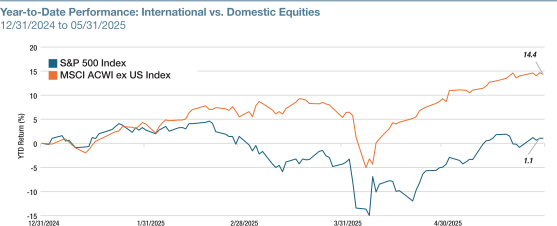
Momentum Builds for International Equities in 2025. In 2025, international equities, represented by MSCI ACWI ex US Index, outperformed the S&P 500 Index by 13.3% on a total return basis as of May 31, 2025. This meaningful reversal in relative performance suggests positive momentum is building outside the U.S., raising the prospect of a structural shift in global equity leadership.
U.S. asset markets are under increased scrutiny as confidence in Treasuries and the dollar weakens amid fiscal uncertainty, a challenging global trade environment, widening budget deficits, and inconsistent policy signals. U.S. Treasury yields have risen sharply, driven by a combination of expansive fiscal policy, supply-demand imbalances, and deteriorating investor sentiment. The most pressing concern centers on the expanding federal budget deficit, which has increased to potentially 7% of US GDP. Planned tax reductions and higher government spending are likely to expand the federal deficit, leading the Treasury to increase debt issuance to support these new initiatives. This backdrop has fueled volatility in the Treasury market, with 10-year yields recently swinging from below 4% to over 4.5%. At the same time, the dollar has depreciated as capital shifts toward international markets.
Increasing exposure to international equities may provide a prudent hedge against U.S.-centric risks while enhancing return potential and improving overall portfolio diversification. Many non-U.S. markets are benefiting from more stable fiscal paths, attractive valuations, supportive policy frameworks, and strong domestic demand—factors that may support long-term sustainable growth.
For investors seeking to optimize portfolio resilience and capitalize on shifting global dynamics, the case for rebalancing toward international equities has strengthened considerably in recent months. Pacer ETFs provides a robust and diversified suite of international equity strategies designed to capitalize on these global shifts. Key offerings include the Pacer Nasdaq International Patent Leaders ETF (PATN), the Pacer Developed Markets International Cash Cows 100 ETF (ICOW), the Pacer Global Cash Cows Dividend ETF (GCOW), the Pacer Trendpilot International ETF (PTIN), and the Pacer Trendpilot European Index ETF (PTEU). Each fund targets distinct segments of the international market and may be positioned to benefit from attractive valuations, strengthening foreign currencies, and supportive policy environments outside the United States. By incorporating these strategies, advisors can help clients align portfolios with a more globally diversified investment thesis that reflects today’s economic realities.
Pacer Advisors, Bloomberg
PAST PERFORMANCE IS NOT INDICATIVE OF FUTURE RESULTS. YOU CANNOT INVEST IN AN INDEX
The Case for International Equities Amid Shifting Global Dynamics
At the start of 2024, many investors began to question the durability of the long-standing "U.S. exceptionalism" trade. Several key factors support a more favorable outlook for international equities: historically wide valuation discounts relative to U.S. counterparts, expectations for a weakening U.S. dollar, favorable policy environments, and improving earnings prospects in non-U.S. markets. Although international equities have delivered strong gains year-to-date, the performance gap with U.S. equities remains wide.
Shifting global dynamics may accelerate capital rotation. Erratic U.S. trade policy and uncertain fiscal measures are eroding confidence in U.S. Treasuries and the dollar as the world’s reserve currency, driving renewed interest in non-U.S. assets.
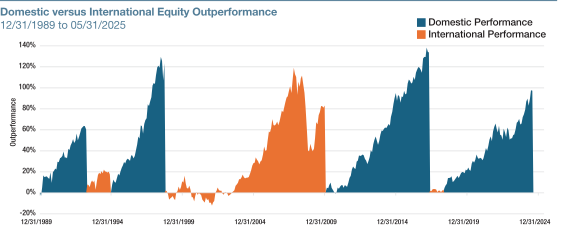
Over the past 35 years, performance leadership between U.S. and international equities has rotated in cycles. The most recent U.S. outperformance cycle began early 2010 and has persisted for about 13 of the last 14 years—by far the longest such stretch, compared to an average cycle duration of roughly five years. As historical patterns suggest, these cycles tend to reverse. Following a prolonged period of U.S. dominance, recent momentum raises the possibility that a turning point in favor of international equities may be underway
Pacer Advisors, Bloomberg
PAST PERFORMANCE IS NOT INDICATIVE OF FUTURE RESULTS. YOU CANNOT INVEST IN AN INDEX
Underexposure to International Equities
Most U.S. investors remain underexposed to international equities, largely due to the strength of the recent U.S. technology-led rally. This domestic bias has created a structural imbalance in many portfolios, presenting both tactical and strategic opportunities to realign equity allocations.
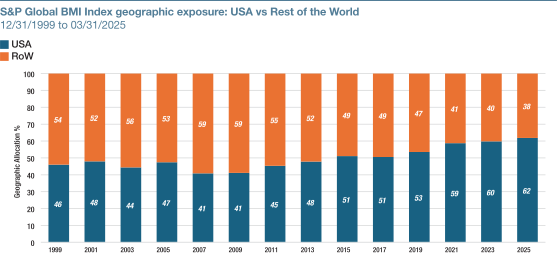
When using the S&P Global BMI Index as a proxy for client regional exposure, we observe a current allocation of approximately 46% to domestic equities and 54% to international equities as of December 31, 1999. However, over the past 25 years, this weighting has shifted dramatically moving from a more balanced position to a 64% domestic and 36% international split. This shift reflects the outsized performance of U.S. technology stocks and has resulted in a growing concentration in a relatively expensive sector of the market.
Given these trends, we believe clients may benefit from reweighting portfolios—reducing exposure to overvalued U.S. equities and increasing allocations to international markets, where valuations remain more attractive. This adjustment not only addresses valuation imbalances but also has the potential to enhance diversification and position portfolios to capitalize on future global growth opportunities.
Pacer Advisors, FactSet
PAST PERFORMANCE IS NOT INDICATIVE OF FUTURE RESULTS. YOU CANNOT INVEST IN AN INDEX
Attractive Relative Valuations
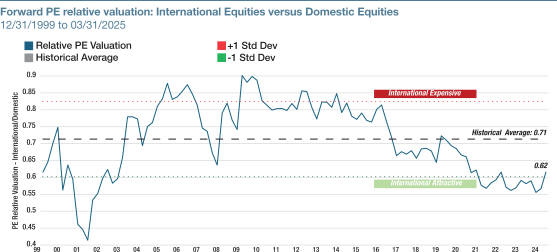
International equities currently trade at a substantial discount to their U.S. counterparts—roughly one standard deviation below historical relative price-to-earnings averages. This valuation gap, now twice the historical norm, presents a compelling entry point for long-term investors.
Importantly, these discounts may not be fundamentally justified. In many cases, investors can access companies abroad that mirror U.S. peers in quality and business model, yet trade at significantly lower valuations. This disparity enhances the potential for capital appreciation and portfolio diversification.
Given the current performance differential between international and domestic equities, now is an opportune moment for advisors to consider increasing international exposure. The risk-reward profile appears particularly attractive—especially for investors seeking undervalued assets with long-term upside.
FactSet, Pacer Advisors. International: S&P Global ex US BMI. Domestic: S&P 500 Index.
PAST PERFORMANCE IS NOT INDICATIVE OF FUTURE RESULTS. YOU CANNOT INVEST IN AN INDEX
Potential for Stronger Economic Growth Abroad
Several international markets appear better positioned for stronger or more stable economic growth compared to the U.S., though this outlook requires ongoing scrutiny. Contributing factors include improving productivity trends and favorable demographic shifts in select regions.
In May 2025, JPMorgan CEO Jamie Dimon highlighted a moderate risk of a U.S. recession, citing ongoing trade uncertainty. Several financial institutions share this cautious outlook, projecting a diminished near-term U.S. real GDP growth forecast. While many economists have recently downgraded the probability of a recession and removed it as their base-case scenario, recession risks remain elevated. The potential for slowing domestic economic activity warrants thoughtful consideration, particularly in the near term.
In contrast, Japan offers a more constructive growth narrative. While consensus real GDP forecasts remain modest— around 1% annually over the next three years—they reflect steady progress. Domestic demand continues to strengthen, driven by rising consumer spending, anticipated wage growth of approximately 3%, strong corporate earnings, and a tight labor market with an unemployment rate hovering around 2.5%. Japan's economy showed early signs of reflation even before the U.S. tariff announcements in early April. Moreover, Japan may be among the first countries to finalize a trade deal with the U.S., potentially adding another tailwind to growth. The Japanese government also retains fiscal capacity to stimulate the economy if growth falters.
The euro area presents a similarly constructive outlook. Consensus forecasts for real GDP growth over the next three years average around 1.5%. Policymakers are pursuing significant fiscal initiatives aimed at stimulating domestic demand, revitalizing industrial capacity, expanding defense spending, and supporting sustained corporate earnings growth.
Shifting Monetary Policy as a Tailwind for International Equities
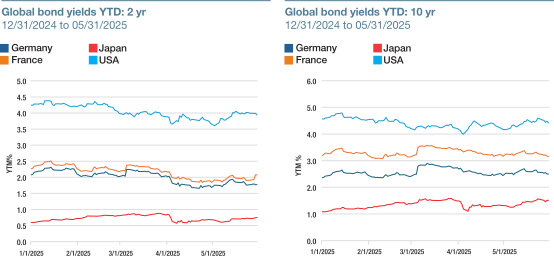
The European Central Bank (ECB) has begun a rate-cutting cycle, marking a transition toward a more accommodative monetary stance. Over the past 12 months, the ECB has lowered its policy rate by 200 basis points, with markets anticipating the possibility of 100 basis points of additional cuts over the next year. This easing trend could support international equities by improving liquidity and reducing the cost of capital.
Other major central banks may adopt similar policies, further supporting favorable global liquidity conditions. In contrast, the Bank of Japan (BOJ) is actively normalizing monetary policy in response to persistent services inflation and sustained wage growth—signaling a structural shift in Japan’s macroeconomic landscape. As inflation becomes increasingly wage-driven rather than transitory, the Japanese economy stands to benefit from stronger domestic consumption, particularly as the BOJ continues recalibrating its policy framework.
As illustrated in the chart below, international bond yields—particularly two-year yields—remain significantly lower than those in the U.S., reflecting a more accommodative monetary environment abroad. Ten-year yields, often used as a proxy for the cost of debt, also point to lower borrowing costs outside the U.S. This evolving global policy landscape presents a dynamic and potentially favorable backdrop for equity investors, especially in select international markets positioned to benefit from diverging central bank trajectories.
Pacer Advisors, Bloomberg
PAST PERFORMANCE IS NOT INDICATIVE OF FUTURE RESULTS. YOU CANNOT INVEST IN AN INDEX
Expansionary Fiscal Policies
SThe European Union and Japan are implementing aggressive fiscal programs aimed at stimulating domestic demand, revitalizing industrial capacity, and supporting long-term equity performance.
European Union: A Strategic Shift
Germany has unveiled a transformative €500 billion infrastructure and defense spending initiative, marking a decisive shift from its long-standing fiscal conservatism. Chancellor Friedrich Merz has pledged to doing “whatever it takes” to strengthen national defense, modernize critical infrastructure, and enhance economic resilience. The government is also advancing a proposed constitutional amendment that would significantly expand defense and military spending, potentially unlocking up to €1 trillion in combined public and private capital. These funds would target key areas such as defense, cybersecurity, intelligence, and civil infrastructure, potentially raising total expenditures from 2% of GDP to as much as 5%. This initiative aims to revitalize Germany’s industrial base, which has faced headwinds from weakening European auto demand and growing global competition, particularly in electric vehicles. Analysts estimate the program could add nearly one percentage point to German GDP, offering a potential catalyst for reversing two consecutive years of economic contraction.
Germany and France are also championing greater economic and strategic autonomy within the European Union. A recent EU policy paper proposes “Airbus-style” industrial coordination in advanced technologies, coupled with capital market integration and regulatory streamlining. The paper emphasizes the importance of strengthening the semiconductor and chip manufacturing sectors as foundational elements of a European AI supply chain.
Recently, a growing number of economists, political strategists, and policymakers have advocated for consolidating Europe’s fragmented defense sector into a more unified and efficient framework. Given the EU’s public debt-to-GDP ratio remains below that of the U.S. and defense spending has historically been modest, this fiscal realignment appears both feasible and potentially stimulative for long-term economic growth.
Japan: Breaking with the Past
Japan is undergoing a structural economic transformation that has been largely underestimated by the markets. The government is embracing more traditional fiscal and monetary policies, which are driving wage growth, persistent services and wage inflation, and a gradual exit from decades of deflationary stagnation.
Sustained wage growth and persistent inflation are fueling domestic demand, prompting the Bank of Japan to continue normalizing interest rates. This marks a fundamental shift in its macroeconomic policy and positions Japan for fasterthan- expected monetary tightening, creating a more favorable environment from a risk return perspective for equity investors.
Currency Tailwinds: USD Depreciation Reinforces International Equity Case
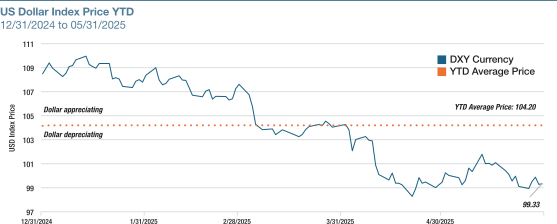
The U.S. dollar has depreciated approximately 6-7% year-to-date in 2025, signaling a potential inflection point in global currency dynamics. This decline reflects waning investor confidence in U.S. exceptionalism and rising skepticism about the dollar’s long-term role as the world’s reserve currency. If these concerns persist, the dollar may remain under sustained downward pressure. A broad reallocation away from the U.S. dollar—driven by a reassessment of American economic dominance—could redirect an estimated $2.5 trillion in assets toward other regions. In this environment, foreign currencies would likely appreciate and international capital markets—particularly in Europe, Japan, and other developed economies—could benefit from renewed investor inflows.
Currency fluctuations materially affect the returns of international equities for U.S.-based investors. When the dollar strengthens, foreign currencies tend to weaken, diminishing the dollar value of non-U.S. holdings and potentially offsetting strong local-market performance. Conversely, when the dollar weakens, foreign currency appreciation may amplify international equity returns, providing a powerful tailwind for globally diversified portfolios.
To quantify this effect, we analyzed five distinct periods of prolonged U.S. dollar depreciation, as measured by the Bloomberg USD Index, dating back to December 31, 1999. In each regime, we compared international equity returns in both local currency and U.S. dollar terms. In every instance, USD-based returns exceeded local currency returns, with an average excess return of 10.1%. This consistent outperformance underscores the added value of foreign currency exposure during periods of dollar weakness in client portfolios.
As the dollar potentially trends lower, international equities may offer enhanced appeal—particularly when supported by improving local fundamentals and accommodative policy settings abroad. This currency-driven return enhancement adds to the case for global diversification, reinforcing the strategic importance of maintaining meaningful international equity exposure in a U.S.-based portfolio.
Pacer Advisors, Bloomberg
PAST PERFORMANCE IS NOT INDICATIVE OF FUTURE RESULTS. YOU CANNOT INVEST IN AN INDEX
International Equity Returns in Local vs. USD Terms During USD Depreciation, Highlighting FX Impact
12/31/1999 - 12/30/2024
| Start Date | End Date | Local FX Return | USD Return | Difference |
| 12/31/2002 | 10/31/2017 | 17.4% | 27.1% | 9.7% |
| 5/31/2010 | 8/31/2011 | -2.5% | 12.7% | 15.2% |
| 11/30/2016 | 4/30/2018 | 12.6% | 21.6% | 9.0% |
| 3/31/2020 | 6/30/2021 | 33.9% | 44.7% | 10.8% |
| 8/31/2022 | 9/30/2024 | 10.7% | 16.5% | 5.8% |
| Average | 10.1% | |||
| Medium | 9.7% |
Source: Bloomberg, Pacer Advisors
PAST PERFORMANCE IS NOT INDICATIVE OF FUTURE RESULTS. YOU CANNOT INVEST IN AN INDEX
Summary:
Although the precise timing of a relative performance shift is difficult to predict, international equities continue to present a strong investment case. Valuation advantages, supportive currency trends, portfolio diversification benefits, and broader market participation underpin their enduring appeal. In recent periods, international stocks have outperformed the broader U.S. equity market while still trading at a meaningful valuation discount. This combination strengthens the argument for incorporating international equities into diversified portfolios, offering the potential for enhanced returns amid changing market conditions.
Pacer ETFs offer a diverse lineup in the international space, including the Pacer Nasdaq International Patent Leaders ETF (PATN), the Pacer Developed Markets International Cash Cows 100 ETF (ICOW), the Pacer Global Cash Cows Dividend ETF (GCOW), the Pacer Trendpilot International ETF (PTIN), and the Pacer Trendpilot European Index ETF (PTEU).
By targeting international markets, these funds are particularly well-positioned to capitalize on these structural dislocations. PATN, GCOW, and ICOW may benefit from compelling valuations, strengthening foreign currencies, and supportive policy shifts—especially in European countries like Germany and France.
As these regions implement reforms and invest in strategic sectors, they may offer an extended runway for growth, reinforcing the relevance of international exposure in global portfolios.
Bloomberg USD Index tracks a more representative basket of currencies by considering global currency market liquidity and trading partners of the U.S.
S&P Global BMI Index is a comprehensive, rules-based index series employs a transparent and consistent methodology across all countries and includes more than 14,000 stocks from developed and emerging markets.
MSCI ACWI ex US Index captures large and mid cap representation across Developed Markets (DM) countries (excluding the US) and Emerging Markets (EM) countries. The index covers approximately 85% of the global equity opportunity set outside the US.
S&P 500 Index tracks the performance of 500 leading companies listed on stock exchanges in the United States.
US Dollar Index is an index of the value of the United States dollar relative to a basket of foreign currencies, often referred toas a basket of U.S. trade partners' currencies.
Download